


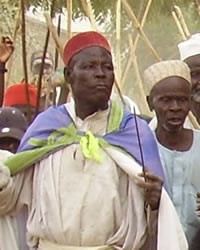

The Podoko are a small ethnic group living primarily in the Far North Region of Cameroon, particularly in the Mandara Mountains area. They are closely related to other highland peoples of the region and share cultural and linguistic ties with neighboring groups. The name "Podoko" refers to both the people and their language, which belongs to the Afro-Asiatic language family. Historically, the Podoko have inhabited the mountainous terrain of northern Cameroon for centuries, where the rugged landscape has shaped their way of life and cultural practices. The community remains relatively isolated due to geographic barriers, which has helped preserve their distinct cultural identity while also limiting their access to modern amenities and services.
The Podoko are primarily subsistence farmers who cultivate millet, sorghum, and other grains suited to their highland environment. They also raise livestock including goats, sheep, and chickens, which serve both as food sources and as valuable trade goods. The agricultural cycle dictates much of their daily routine, with planting and harvest seasons bringing the entire community together for collective work efforts. Women play a crucial role in food preparation and often tend smaller garden plots near their homes, growing vegetables and legumes that supplement the family diet.
Family structure is patrilineal, with extended families living in close-knit compounds. Elders hold significant authority in decision-making, and respect for parents and ancestors remains central to Podoko culture. Marriages are often arranged through negotiations between families, and bride price exchanges cement these unions. Children are valued highly, and large families are considered a blessing.
Food in Podoko communities reflects their agricultural production. Millet porridge, sorghum bread, and grain-based dishes form the dietary staples. During celebrations and special occasions, families slaughter livestock to prepare festive meals. The preparation of food is often a communal activity, with women gathering to process grains and prepare meals for family events.
Celebrations mark important moments in the Podoko calendar. Naming ceremonies for newborns bring families together, as do marriage celebrations that can last several days. Harvest festivals express gratitude for the year's crops and involve feasting, dancing, and strengthening of community bonds. These occasions reinforce social cohesion and transmit cultural values to younger generations.
Traditional beliefs in spiritual forces and the veneration of ancestors remain significant in Podoko worldview. Many Podoko maintain a holistic understanding of the spiritual realm that incorporates both Islamic doctrine and indigenous spiritual concepts. Sacred sites in the mountains hold religious significance, and certain rituals connect the community to their ancestral heritage.
Christian presence among the Podoko remains minimal. Most of the population has not heard a clear presentation of the gospel message, and churches have not established a significant foothold in Podoko areas. The combination of geographic isolation, strong Islamic tradition, and limited missionary outreach has meant that most Podoko have little meaningful exposure to Christian faith and teaching. This reality presents both a challenge and an urgent opportunity for gospel witness.
The Podoko face significant physical challenges rooted in their remote mountainous location. Healthcare infrastructure is severely limited, with few clinics or trained medical personnel accessible to the community. Maternal and child mortality rates remain high due to lack of prenatal care and emergency medical services. Malaria, waterborne diseases, and malnutrition are common health problems that go largely untreated. Access to clean water is inconsistent, particularly during dry seasons, and sanitation facilities are basic.
Educational opportunities are extremely limited for Podoko children. Few schools operate in their territory, and many families cannot afford fees or can spare children from agricultural work. Literacy rates are low, particularly among women, which perpetuates cycles of poverty and limits economic opportunity. Quality education that could equip young people with skills for improved livelihoods remains largely inaccessible.
Economic development in Podoko communities lags significantly behind national averages. Subsistence farming provides only minimal surplus, and market access for agricultural products is restricted by poor roads and geographic isolation. Poverty is widespread, with families struggling to meet basic needs. Limited employment opportunities force many young people to migrate to urban areas, fragmenting families and communities.
Pray for improved healthcare and medical access in Podoko areas, that disease and malnutrition would be reduced and that mothers and children would be protected through better care.
Pray that educational opportunities would expand in Podoko regions, enabling children to gain literacy and skills while fostering community development and improved economic conditions.
Pray that God will raise up Podoko believers who will courageously share the gospel within their own communities, becoming a transformative witness among their people and their neighbors.
Pray that the Podoko would encounter the living Christ through dreams, visions, and faithful witnesses, turning from darkness to light and establishing a strong, indigenous church movement that glorifies Jesus among the Far North Region.
References
Scripture Prayers for the Podoko in Cameroon.
| Profile Source: Joshua Project |


